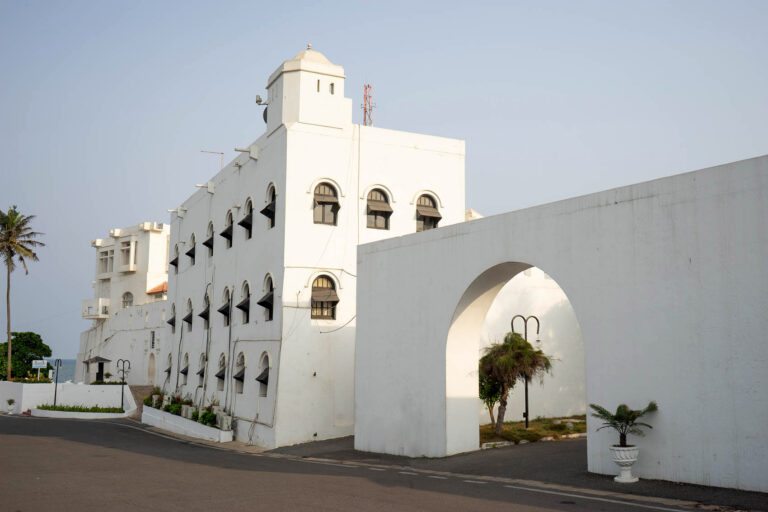
Paga Pia Palace
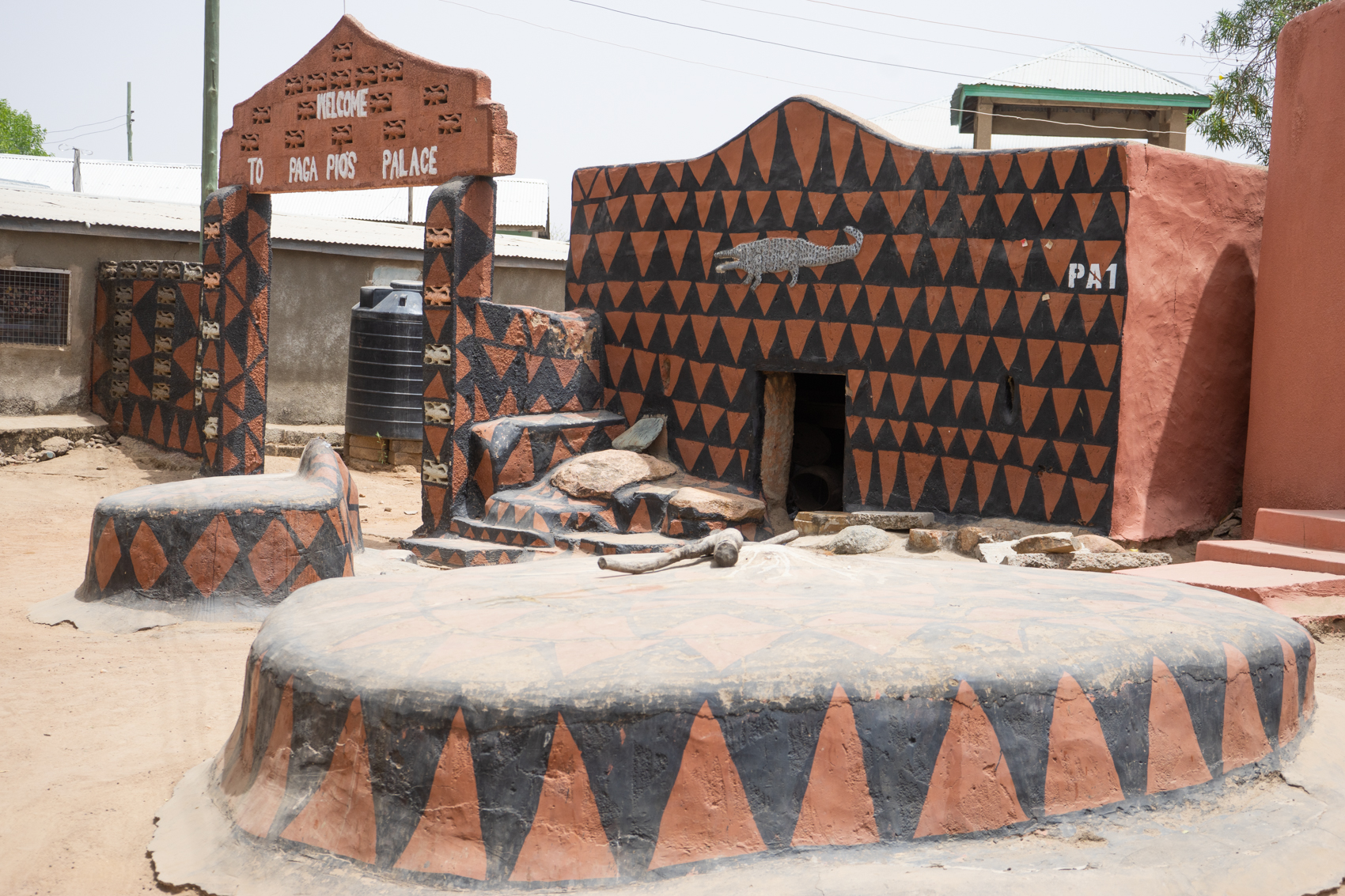
After having conquered our fears at the Crocodile Pond in Paga, we felt like a more soothing experience, so wandered over to the nearby chief’s palace, which has been set up as a touristic primer to the housing style of the Kassena people, a tribe of about 160,000 people, found along the border between Ghana and Burkina Faso. We were met at the gate by a guide who brought us into the labyrinthine complex.
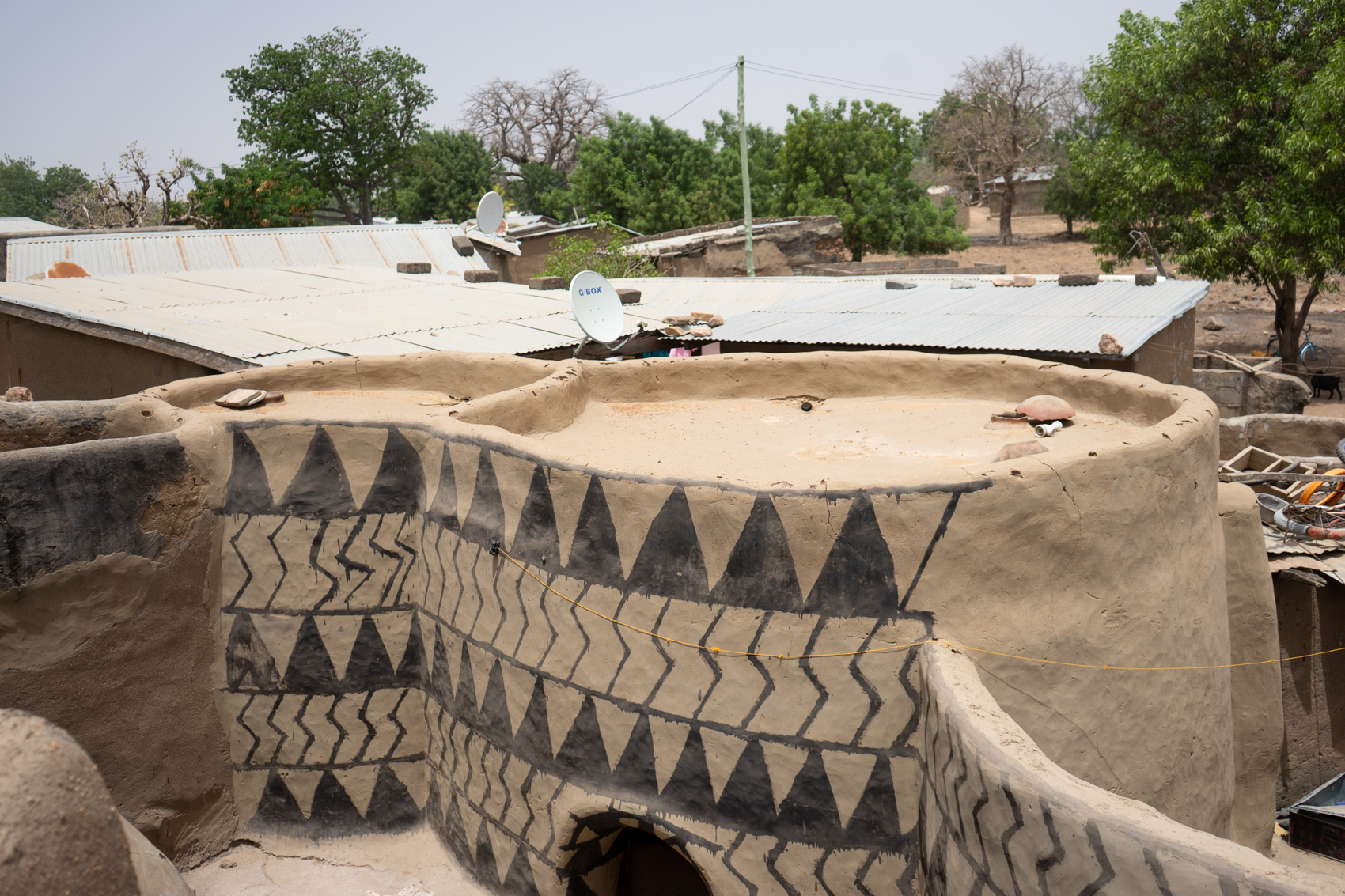
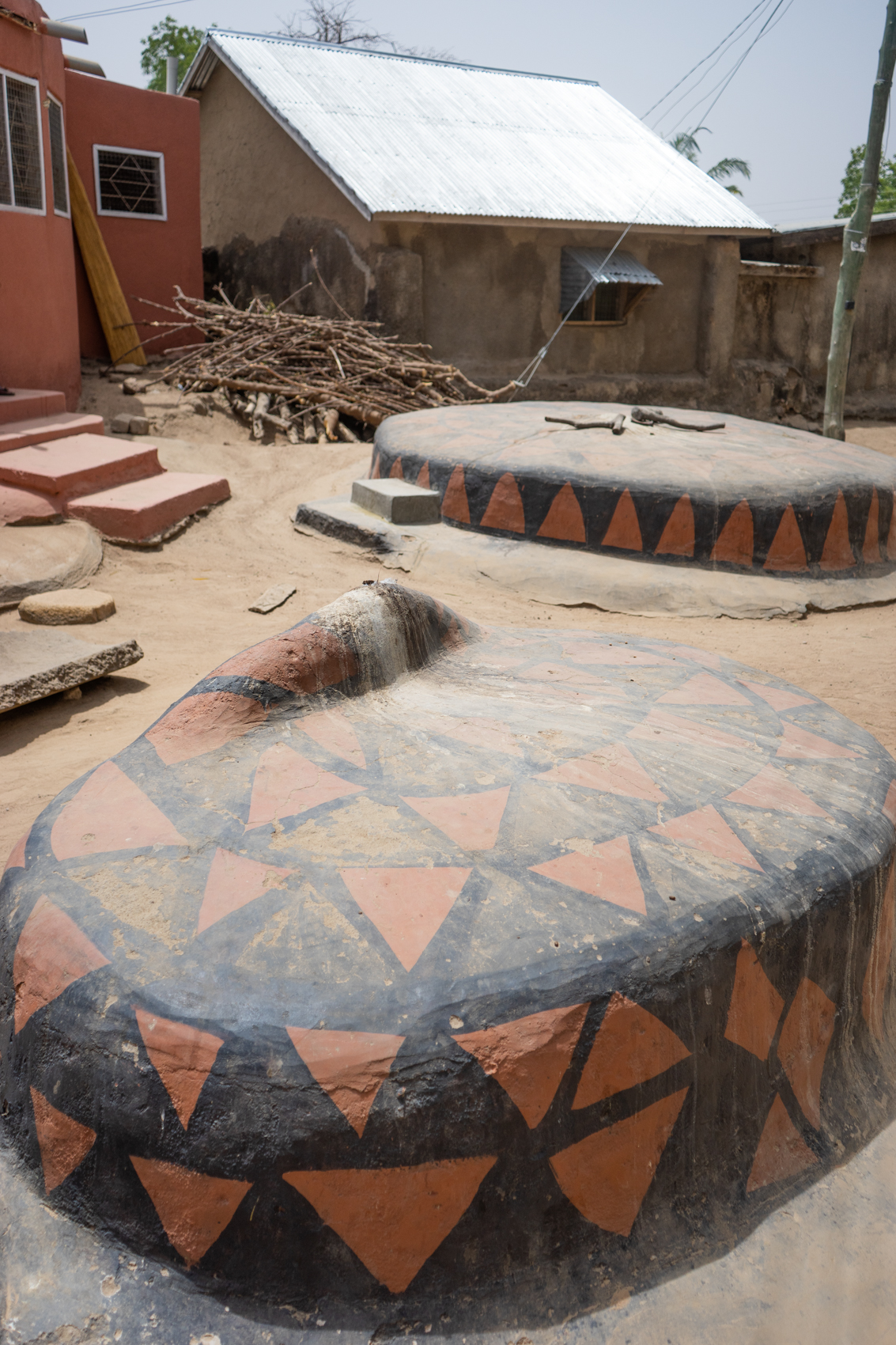
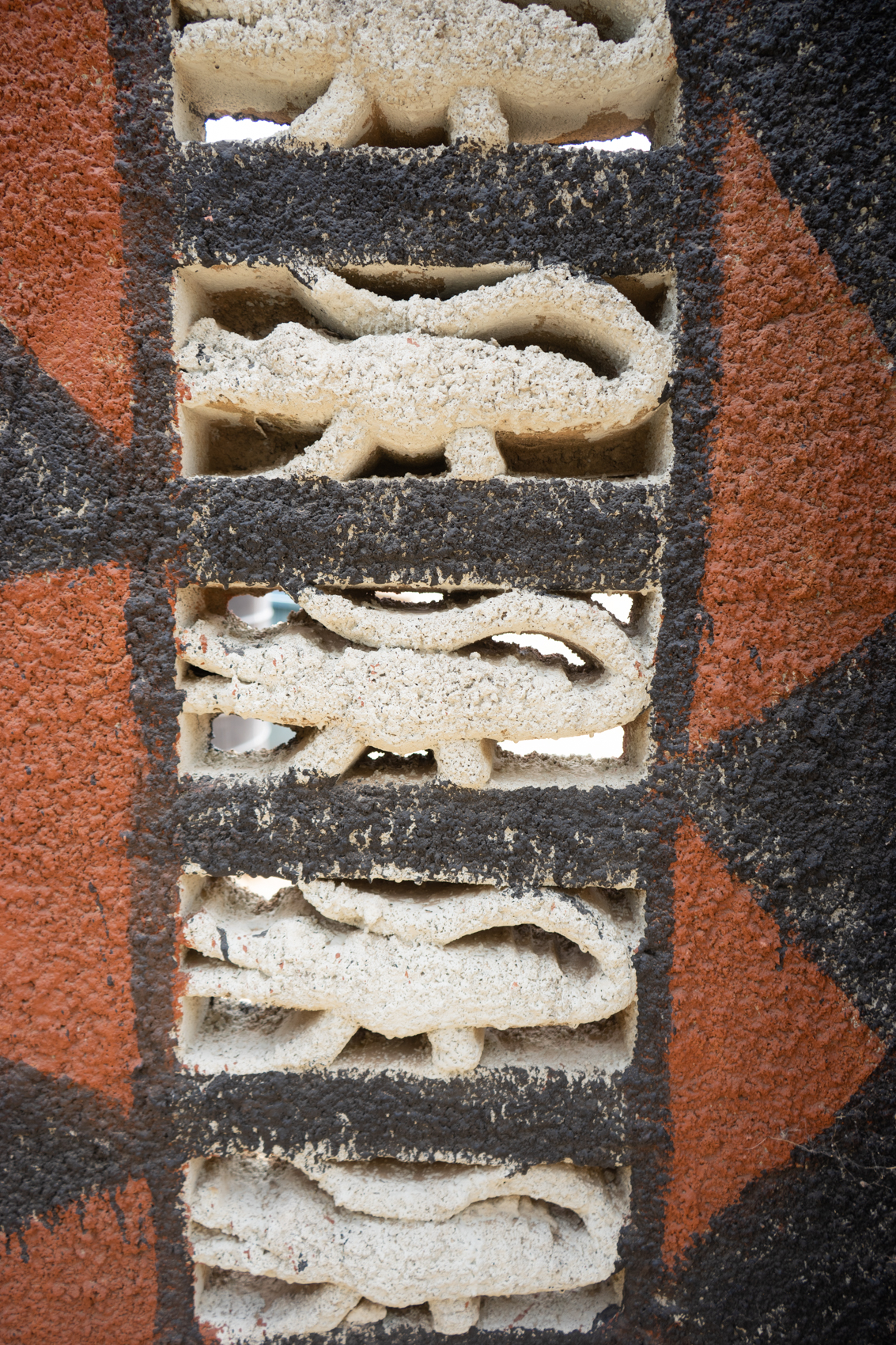
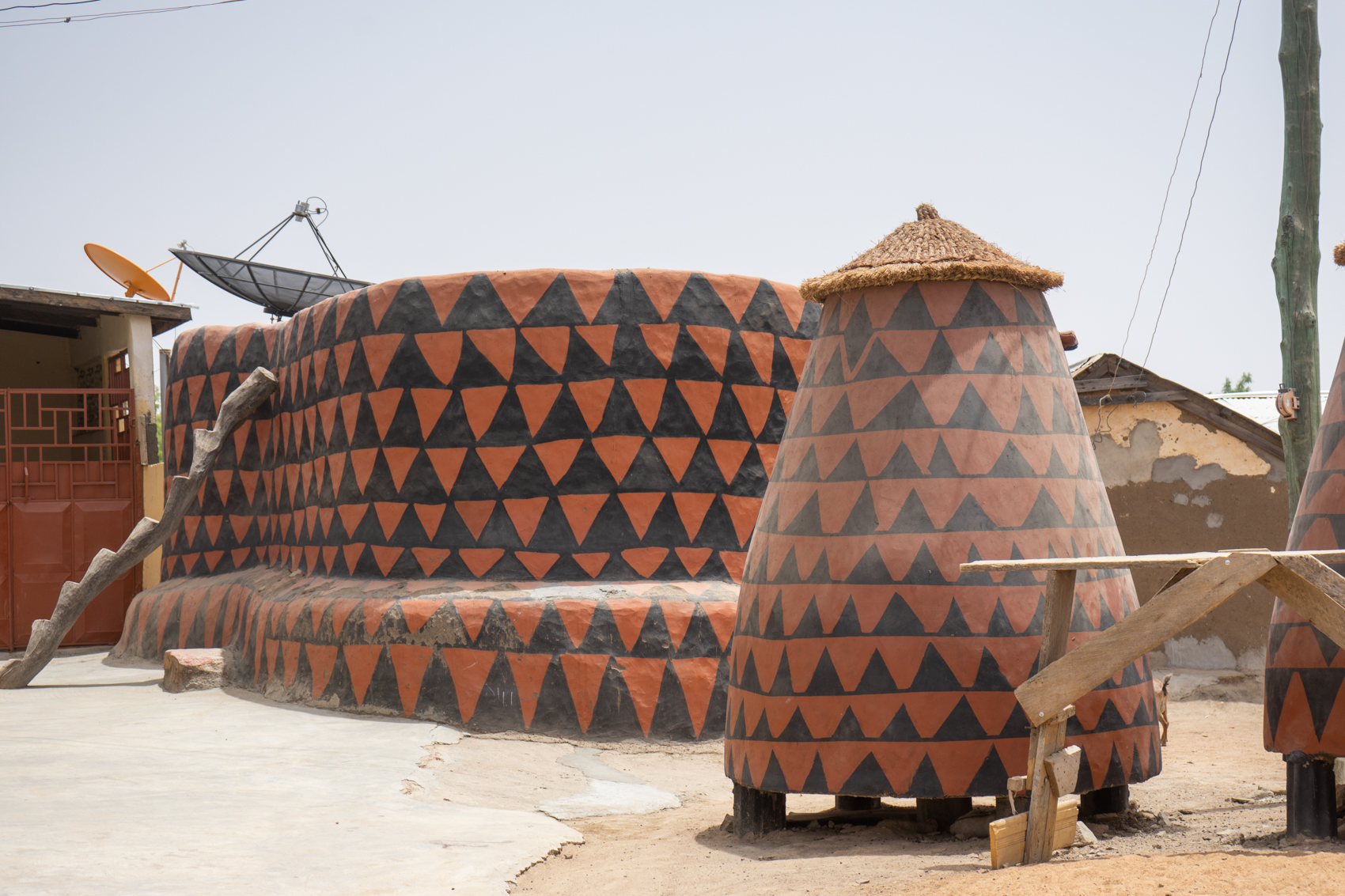
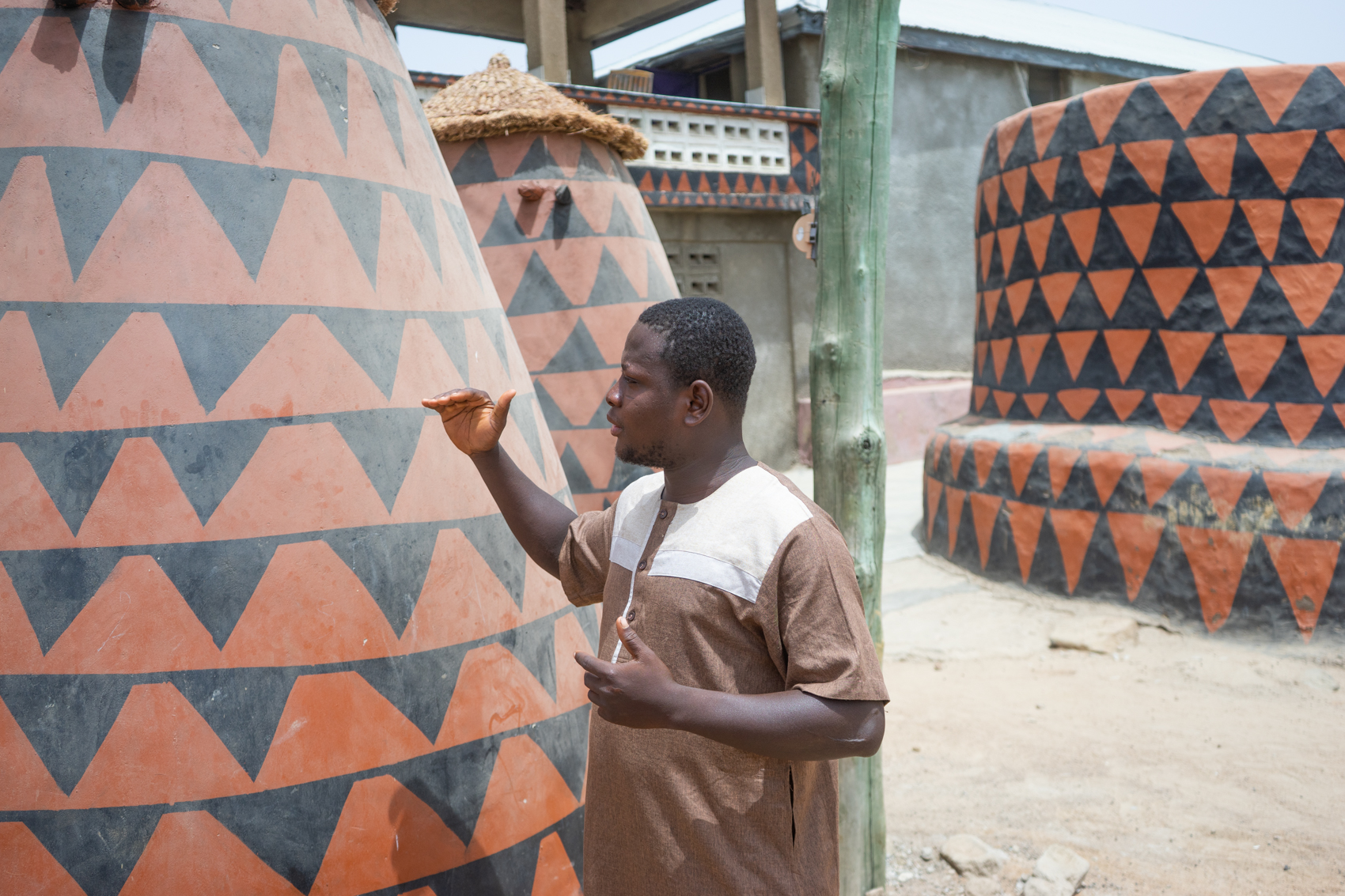
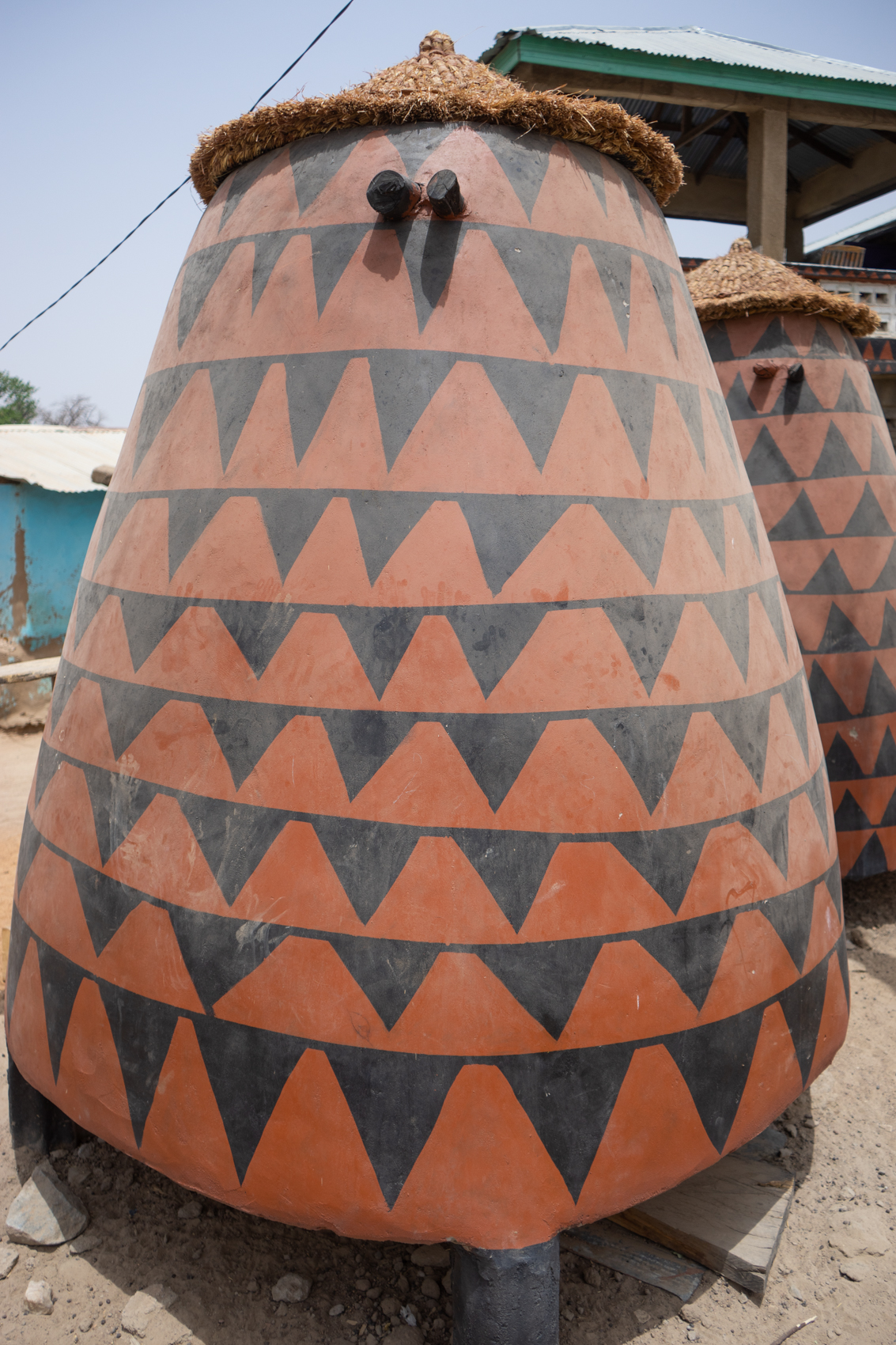
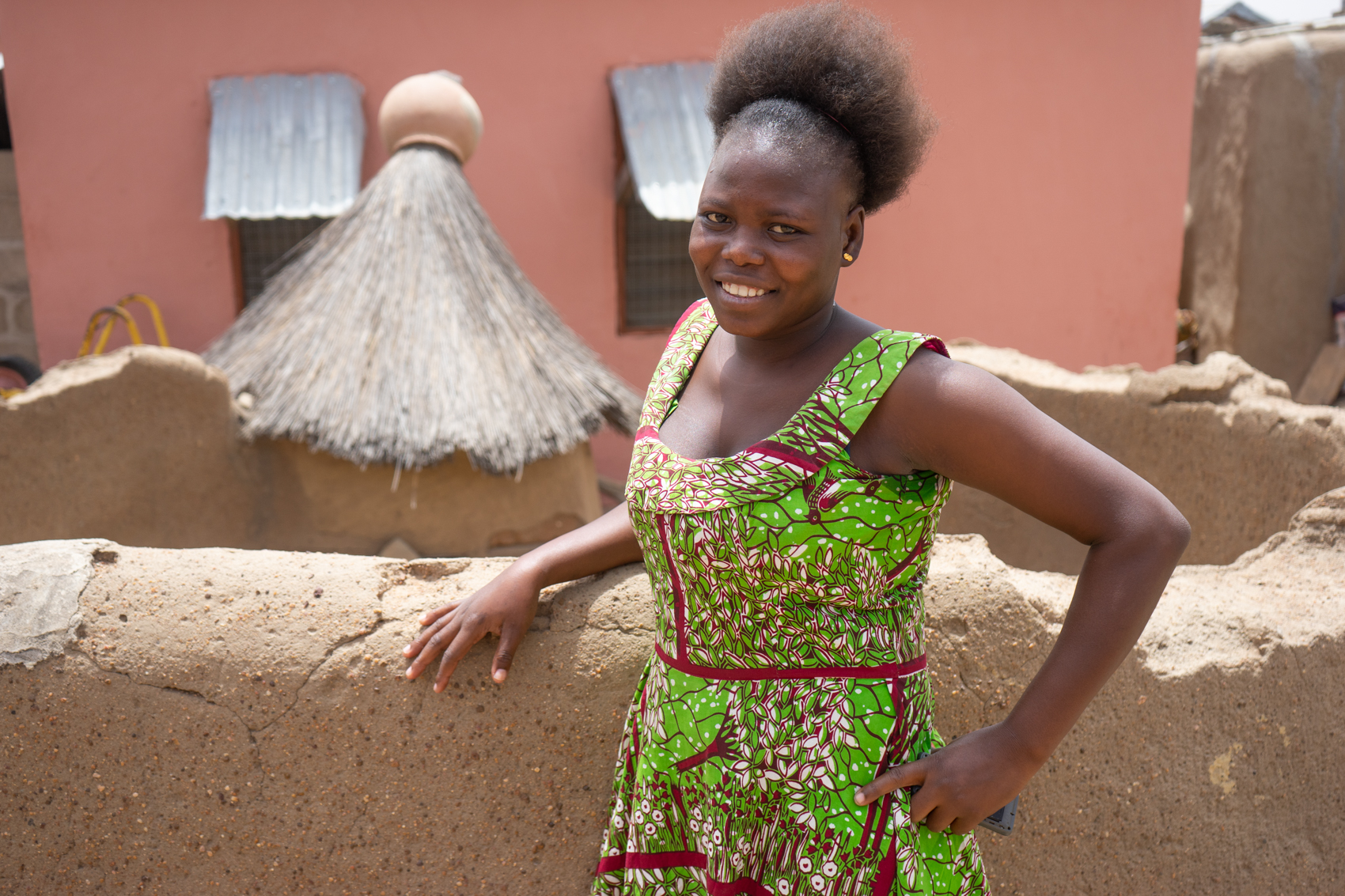
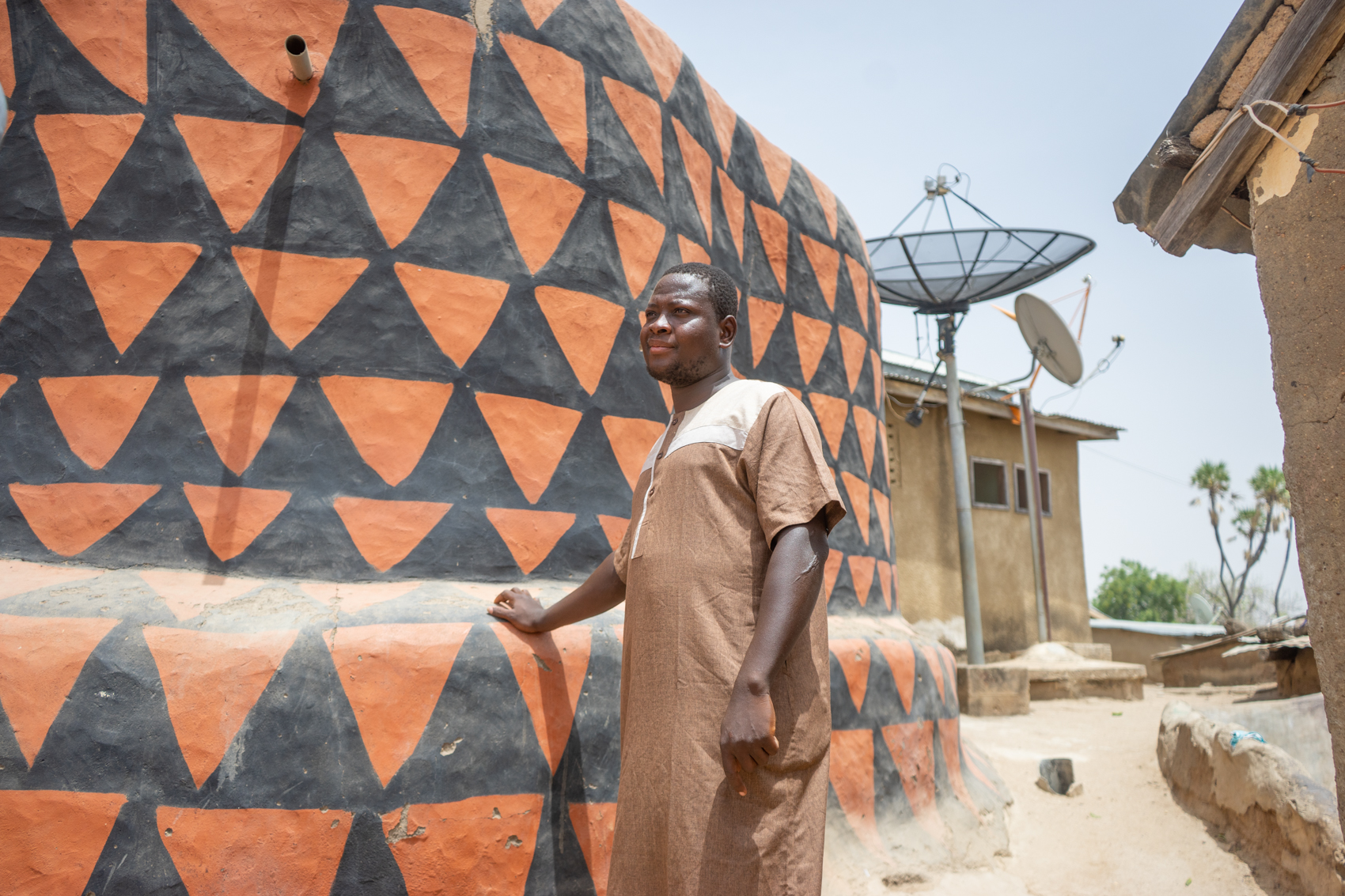
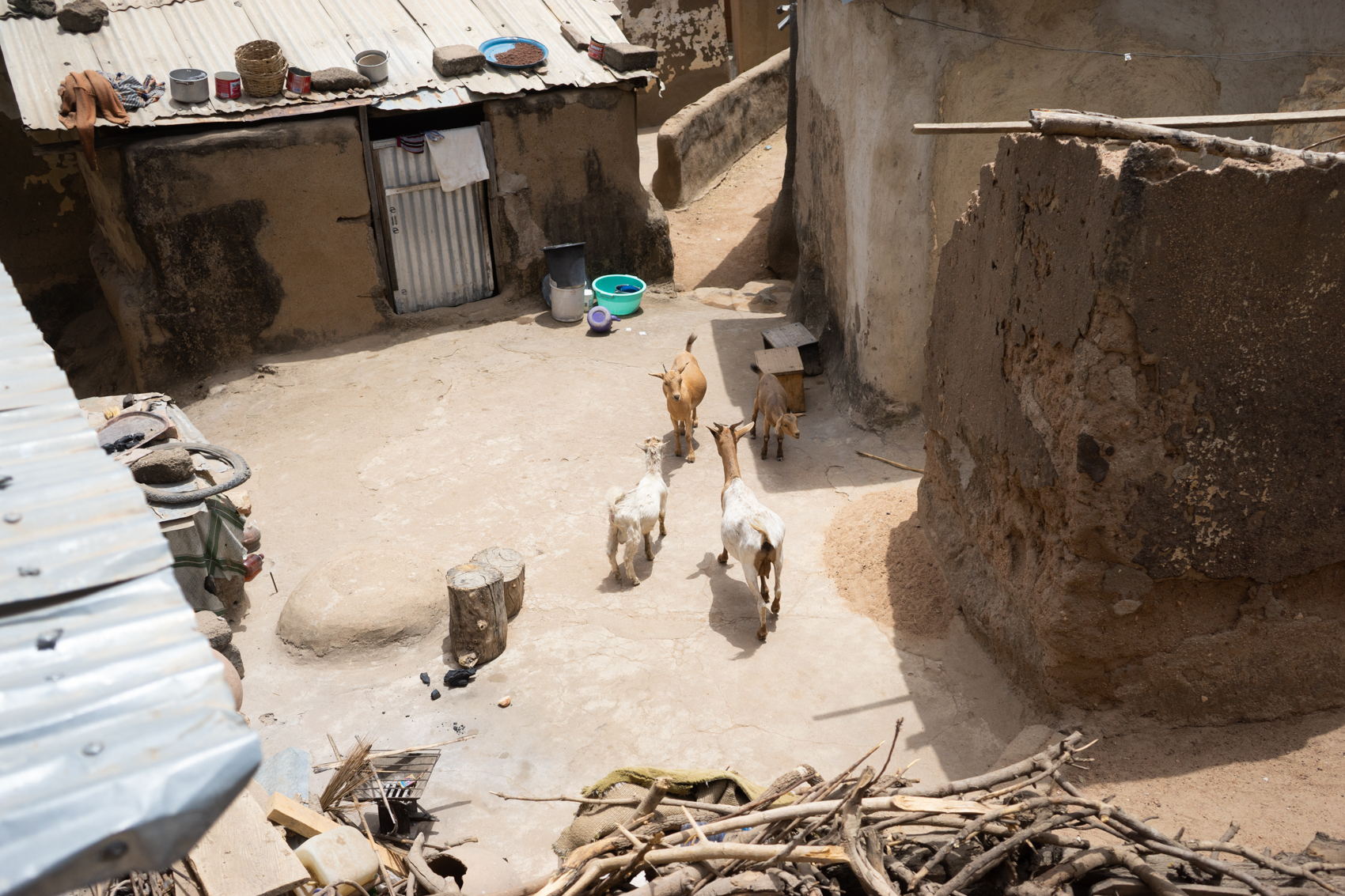
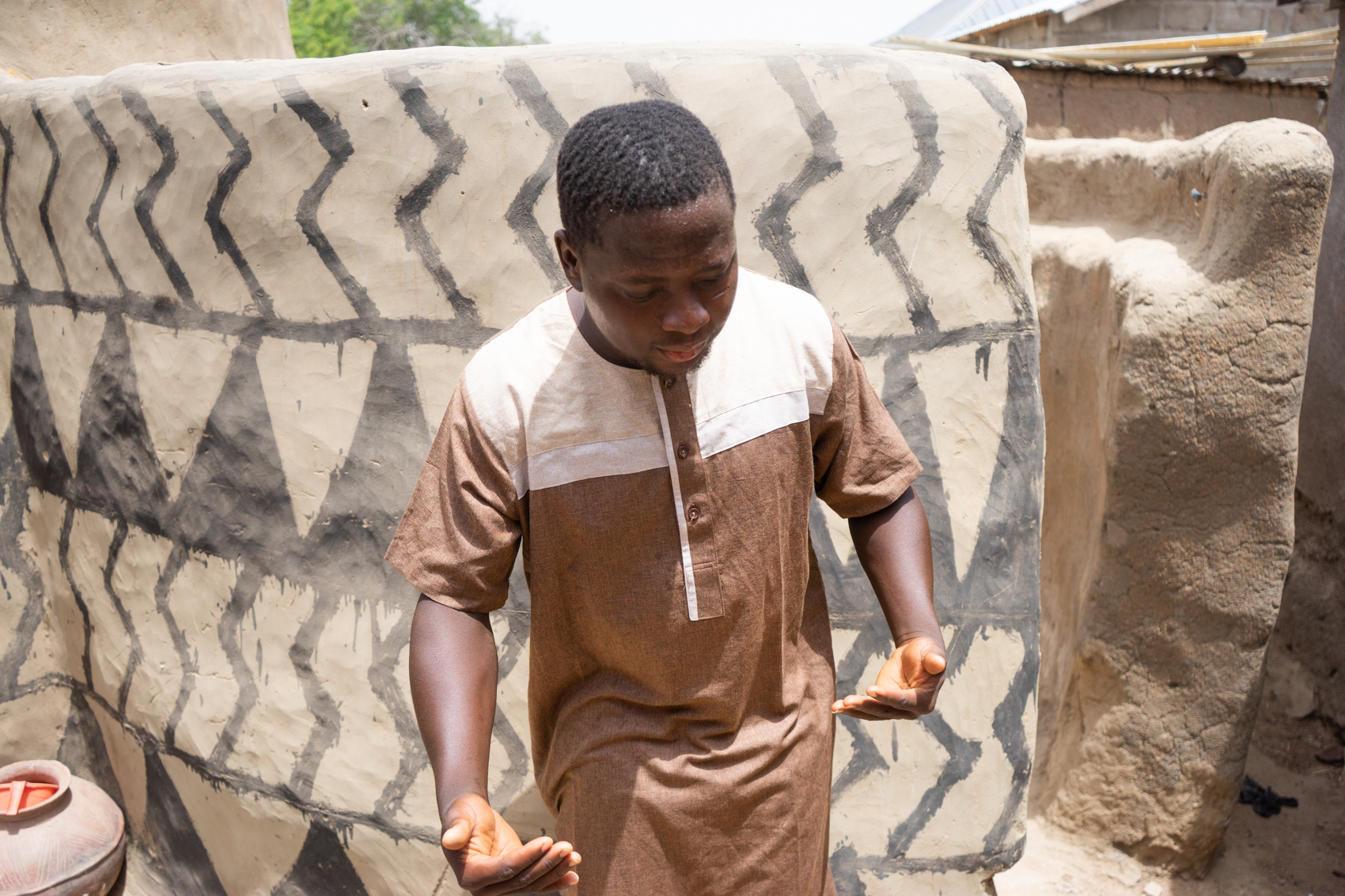
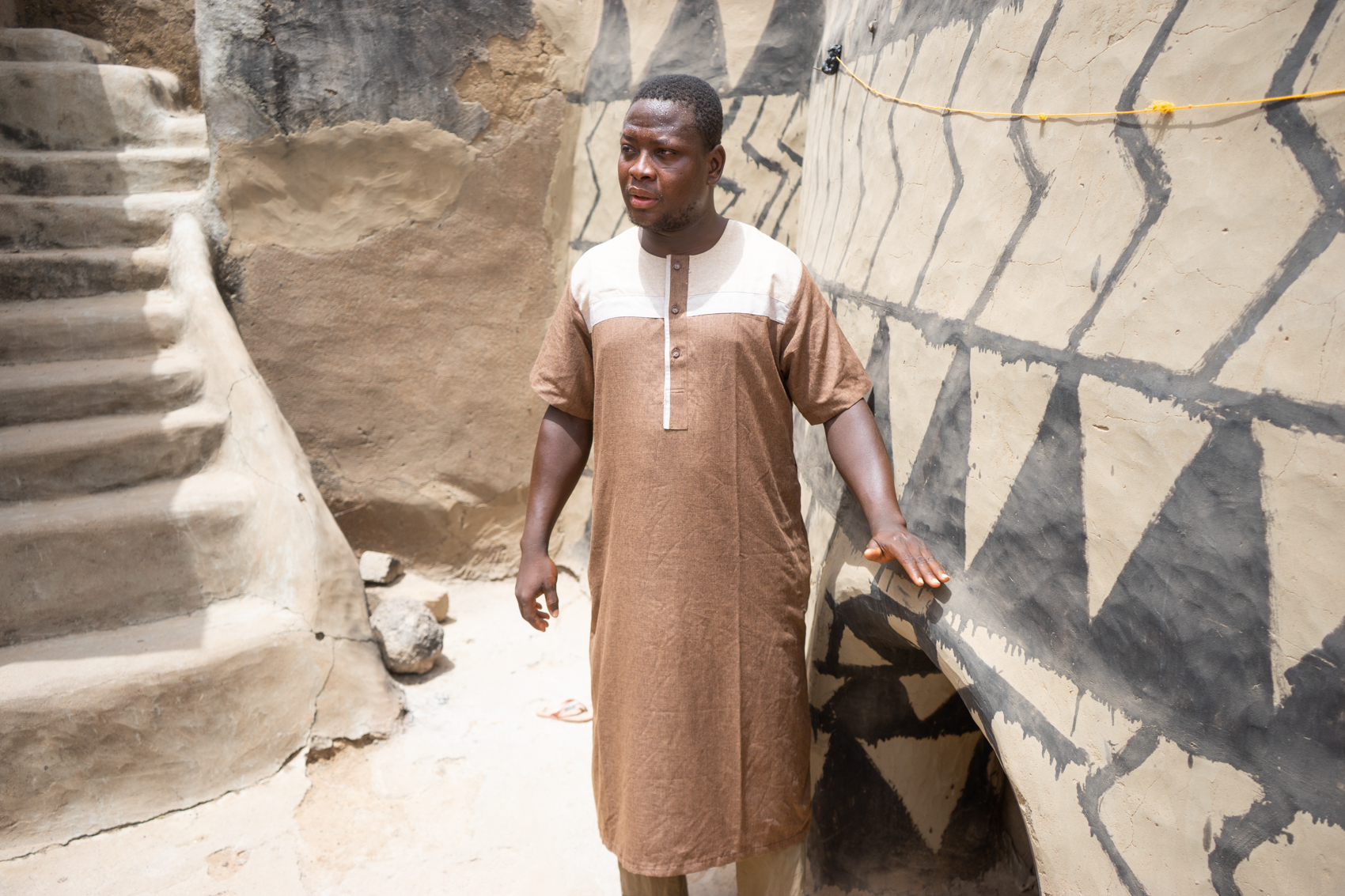
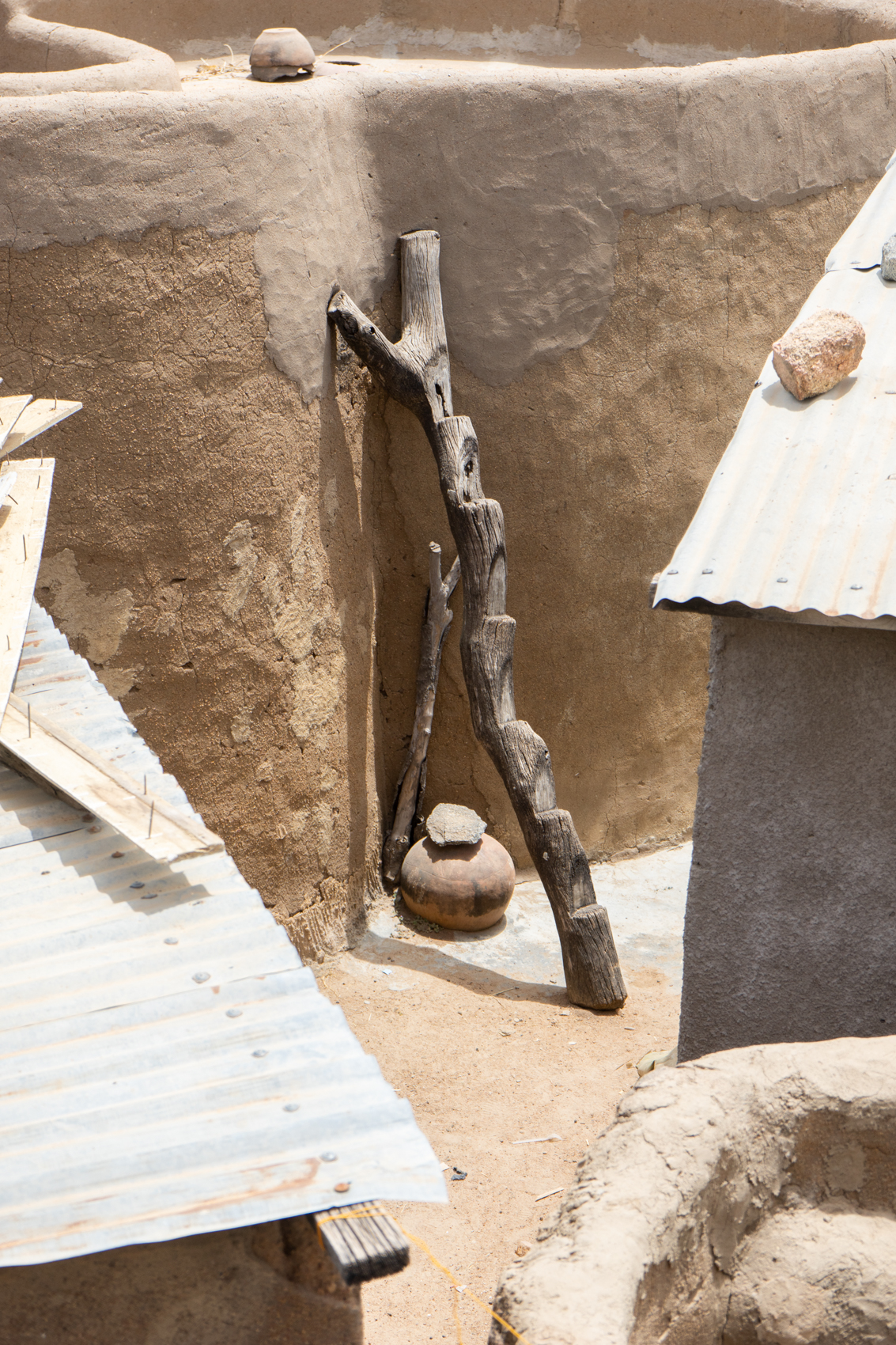
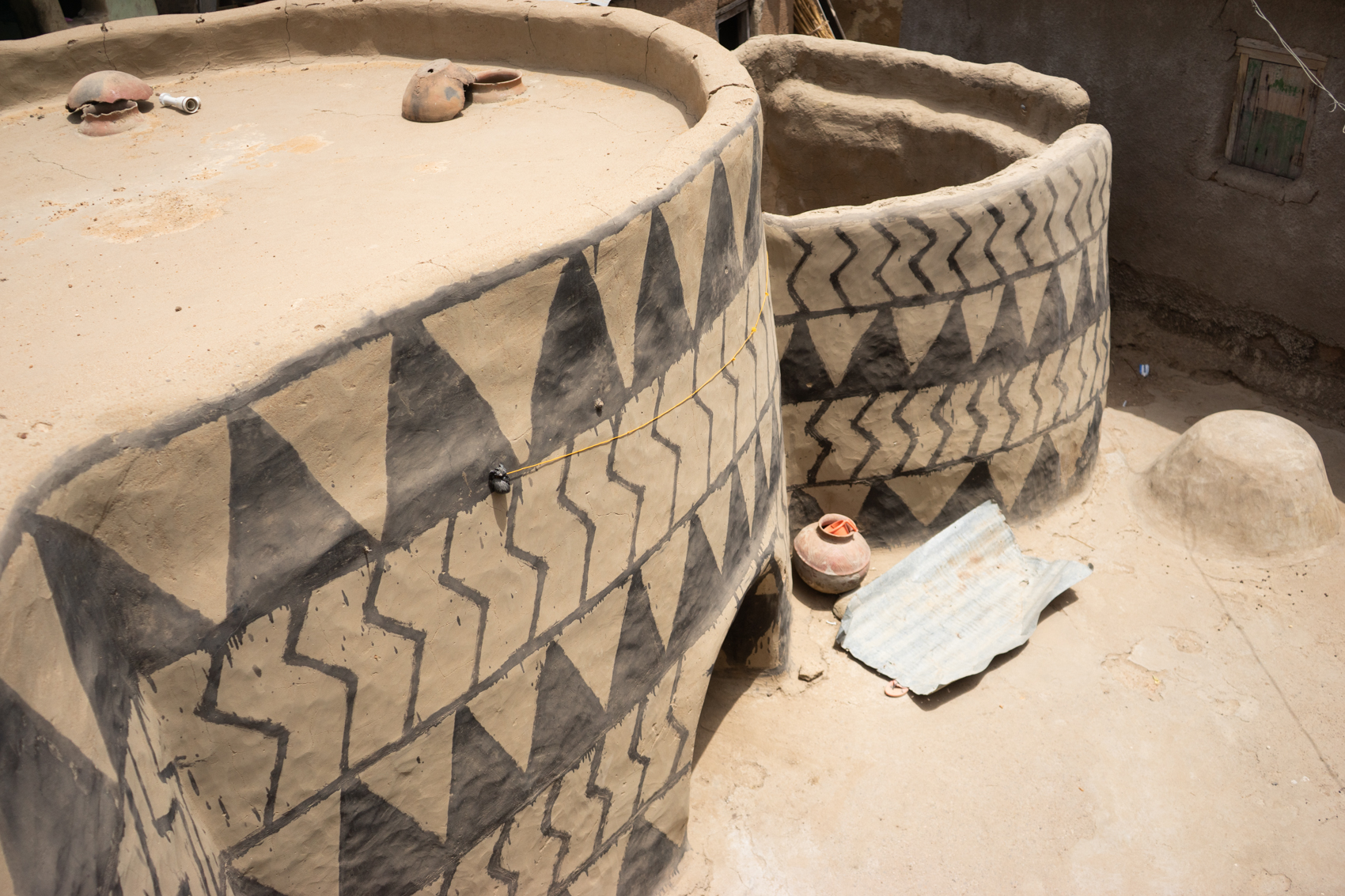
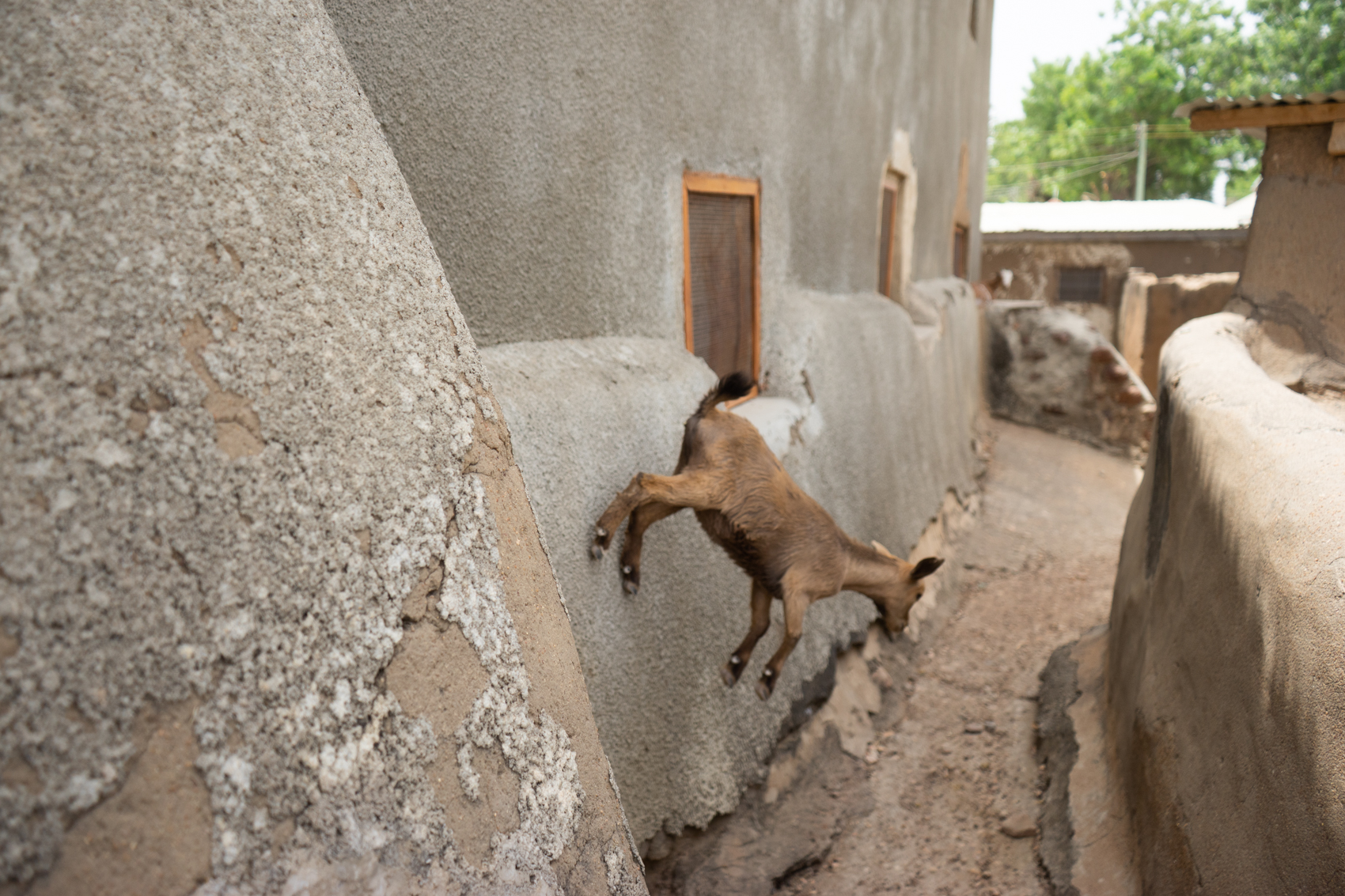
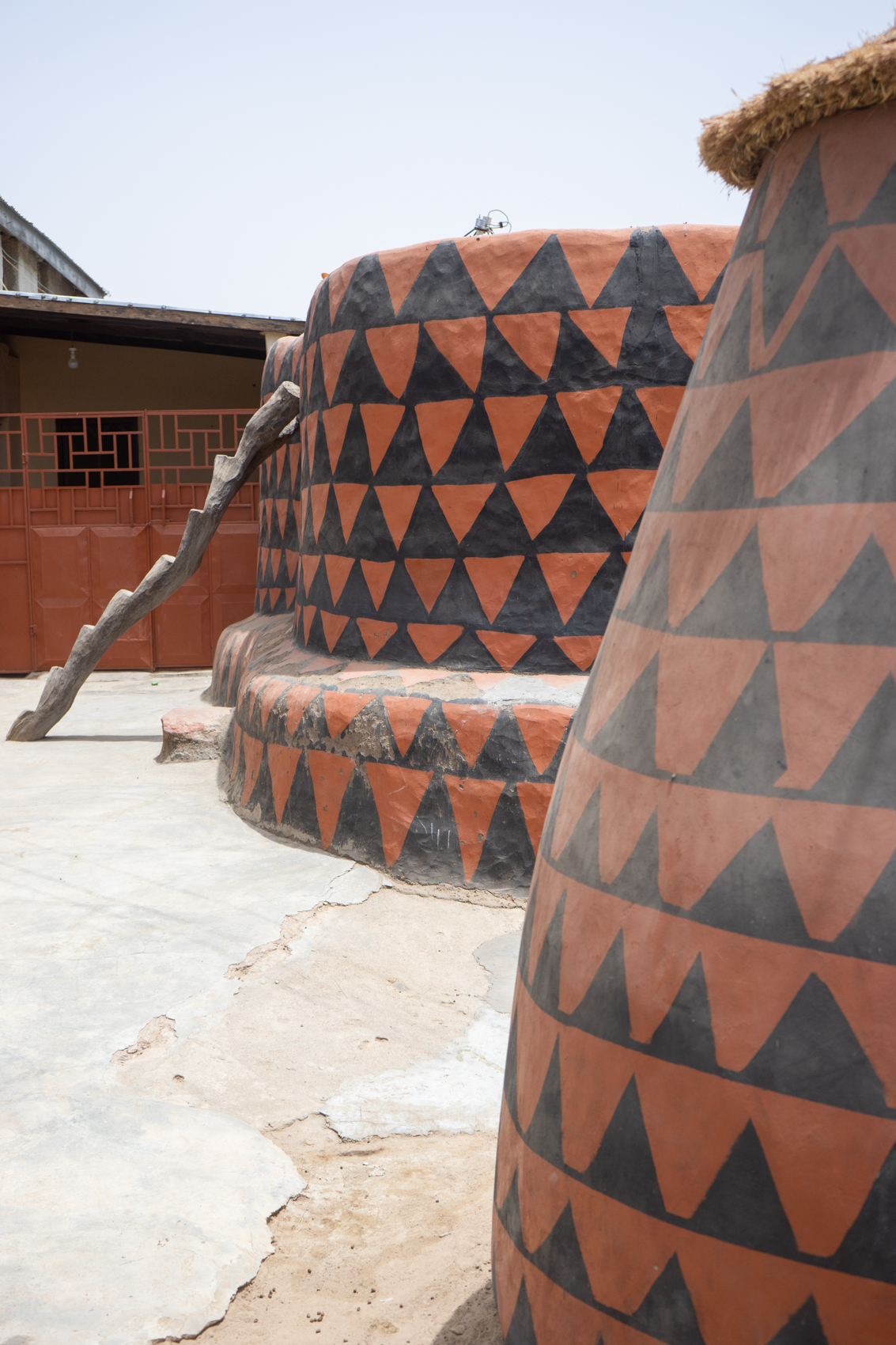
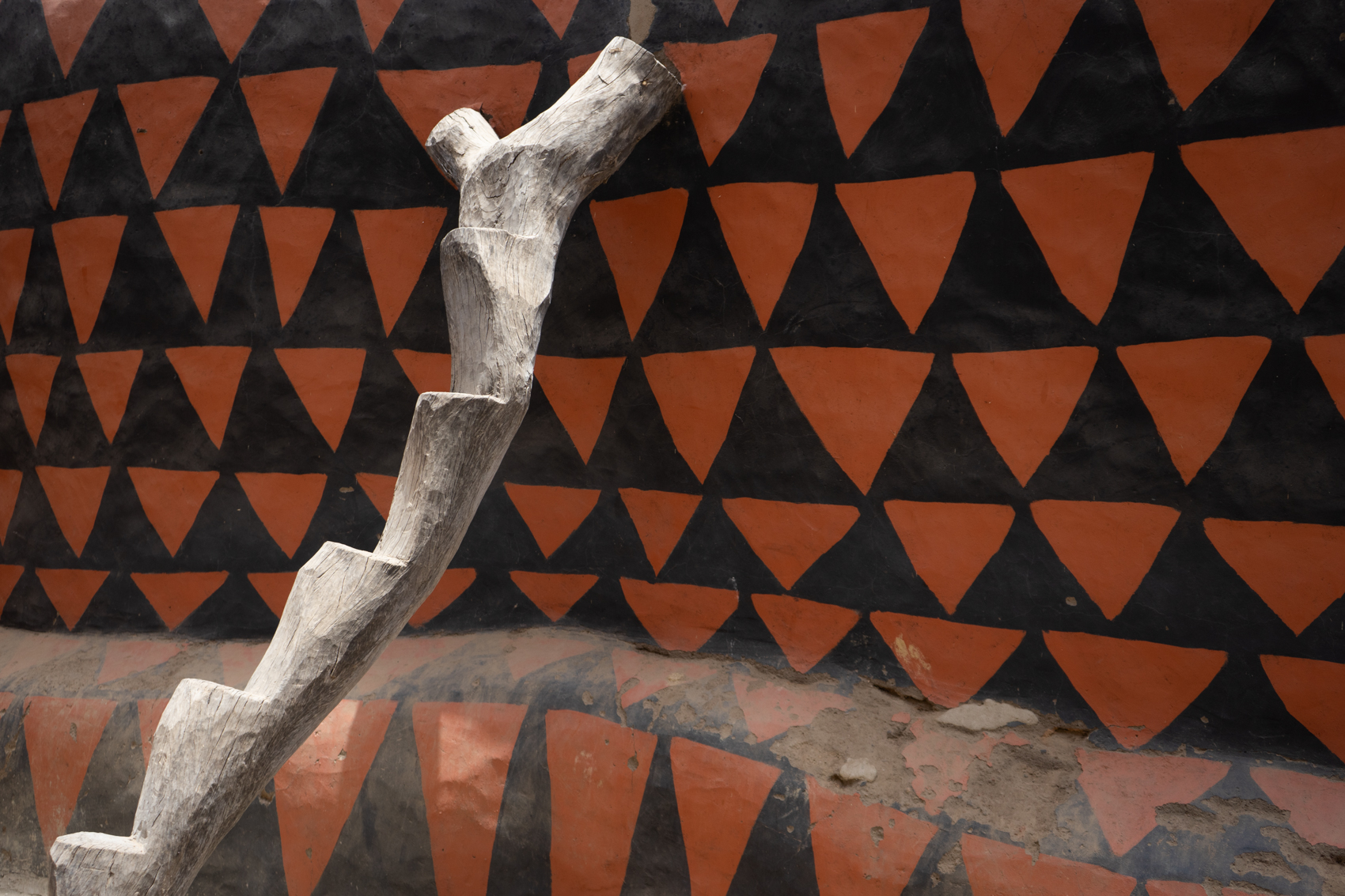
It might be called a “palace”, but once inside, we realized this was really more like a massive living space for an extended family. Mud walls brightly decorated with geometric patterns separate the various living quarters, all connected by paths. The houses themselves vary between the classic clay constructions we’ve seen elsewhere around Northern Ghana and more modern buildings.
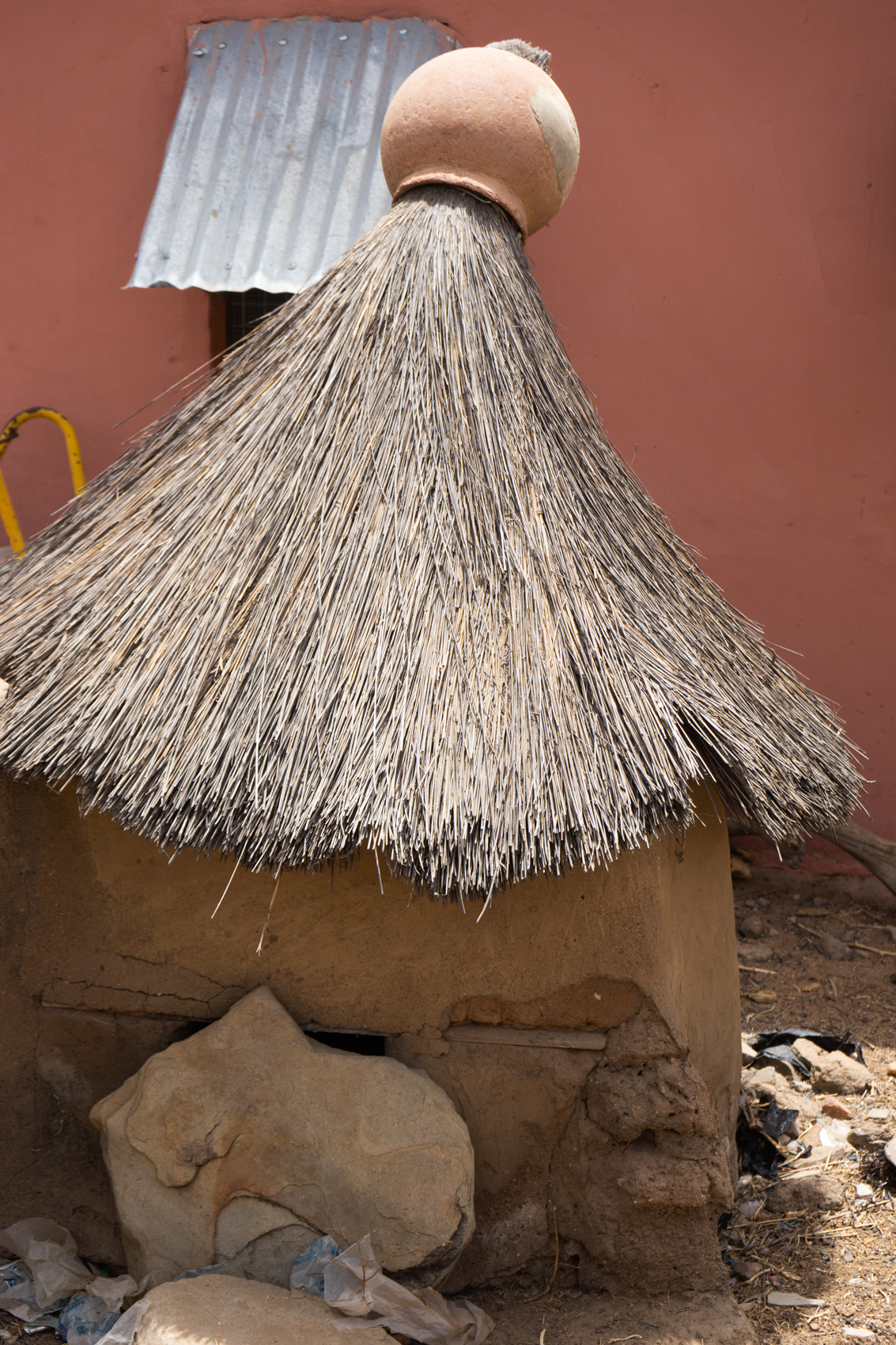
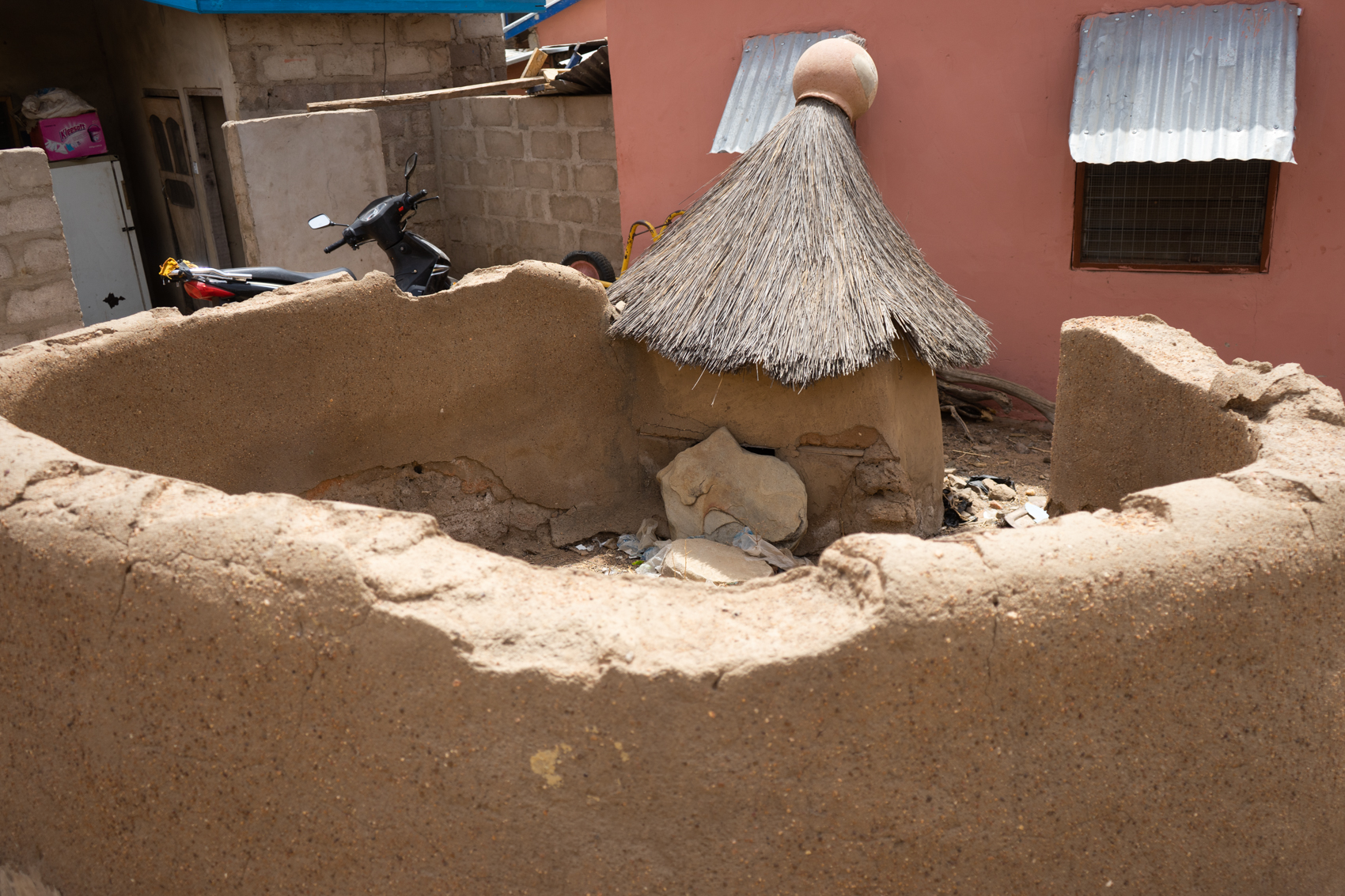
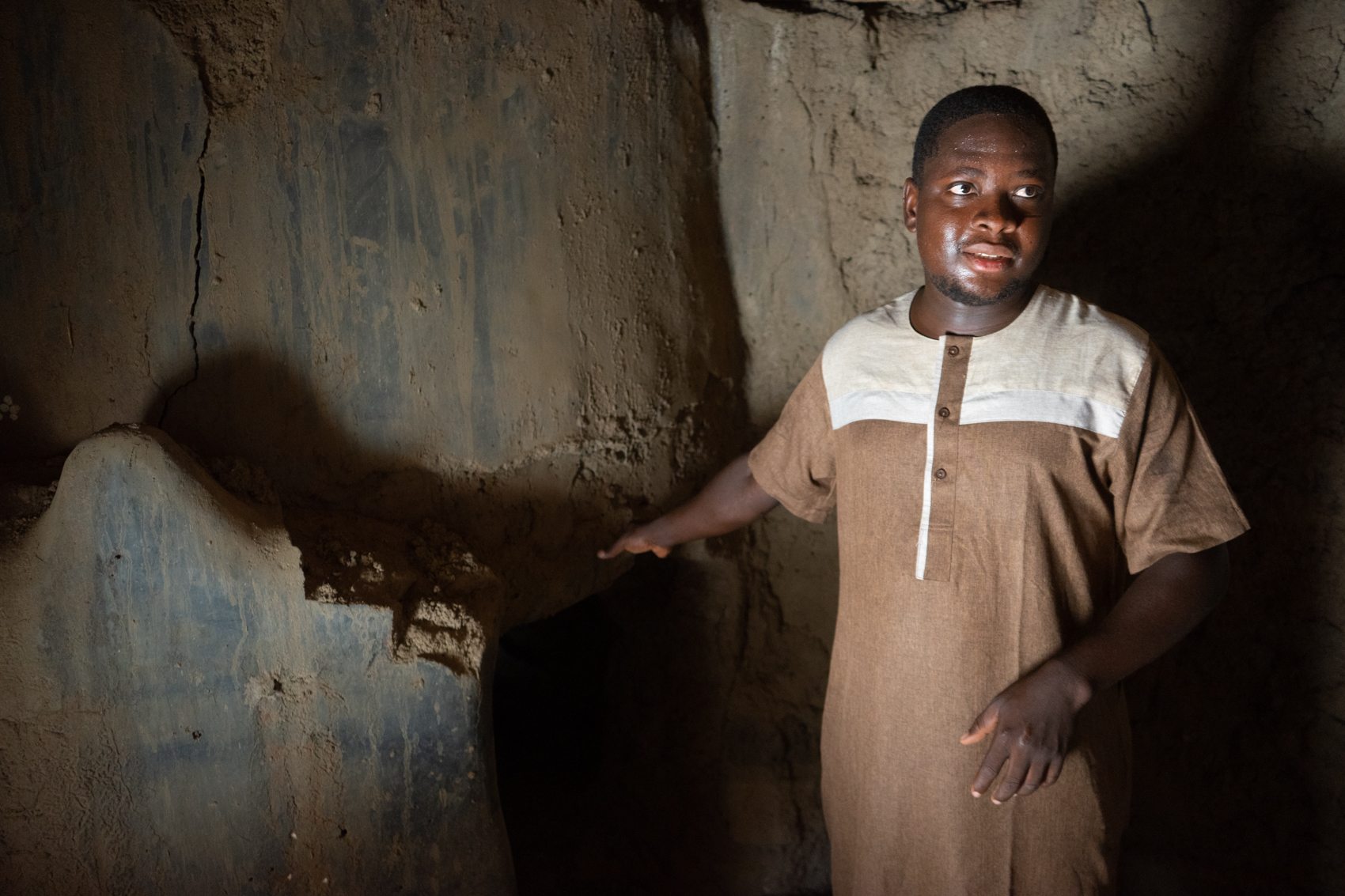
Our tour started at the village burial pit, where the Kassena dig straight down into the earth to lay their dead ones to rest. Before a burial, someone has to crawl down into the pit and push the old bones toward the back, to make space for the new arrival. Some members of the tribe get their own special burial spot, and we saw little mounds throughout the complex marking them, but most are interred here.
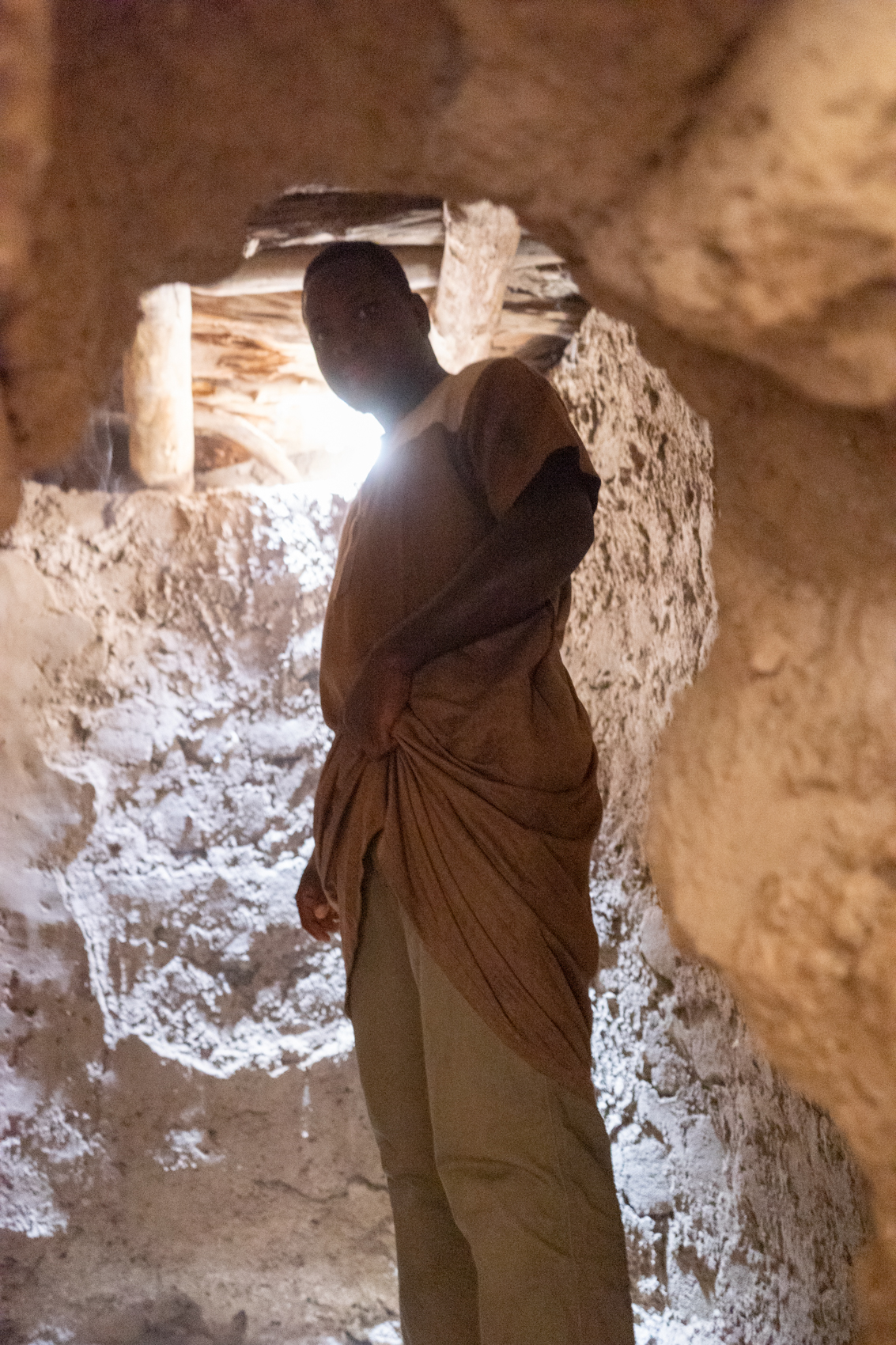
We continued into one of the old sleeping quarters, needing to get down on all fours to crawl through the small entrance. Our guide explained that this was a protective measure against slavers — this was an area which saw a lot of kidnapping. The locals would flee their would-be captors and jump quickly into one of these structures, where a machete would be waiting by the door. Because the slaver would have to enter slowly on his knees, the Kassena had ample time to strike.
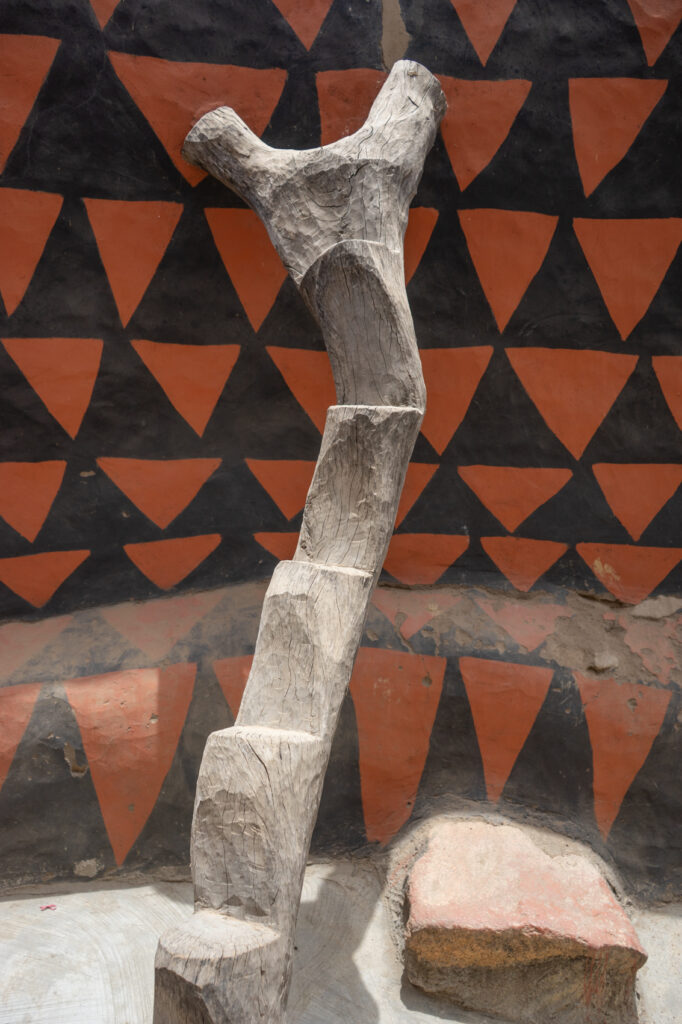
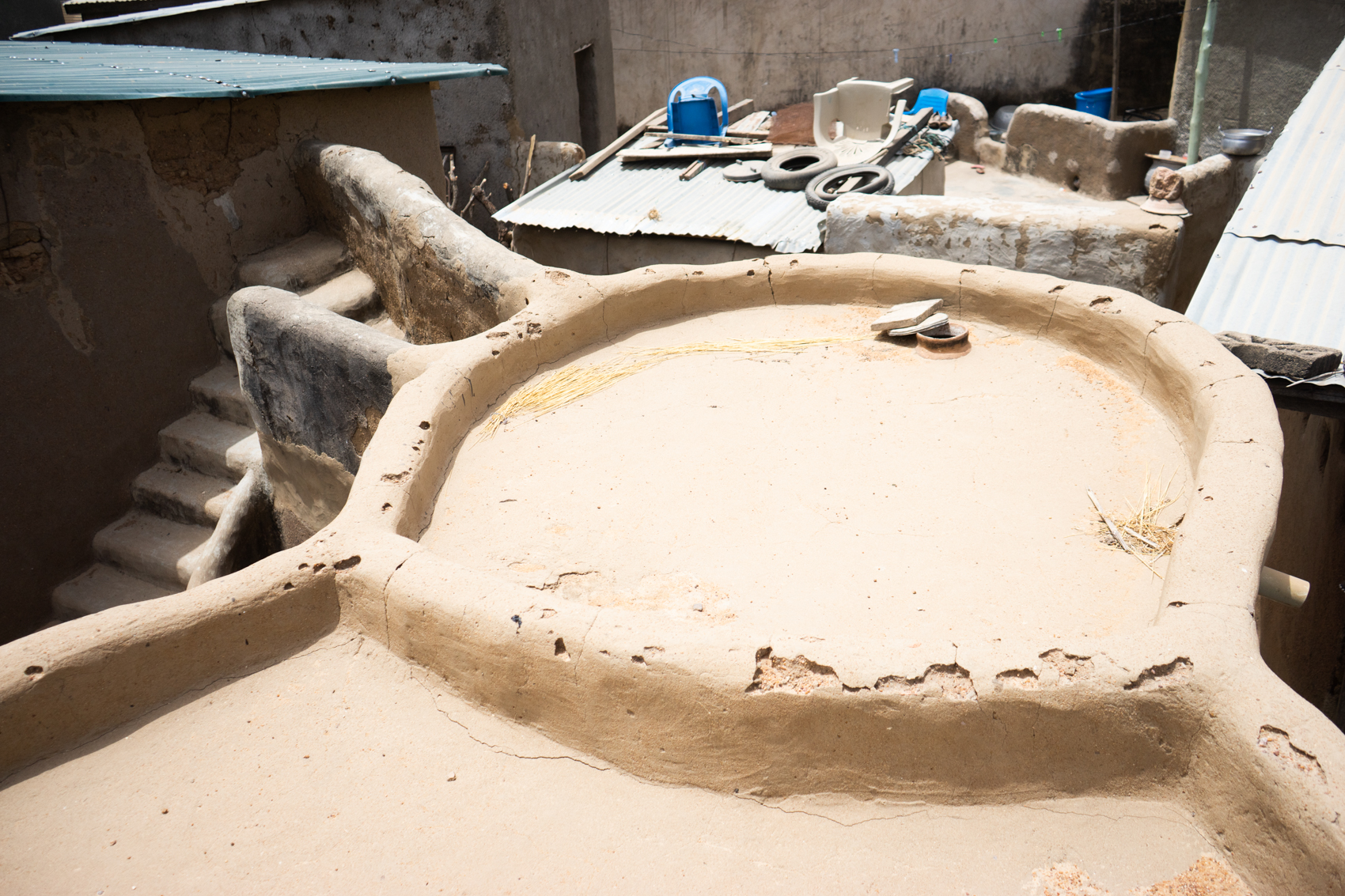
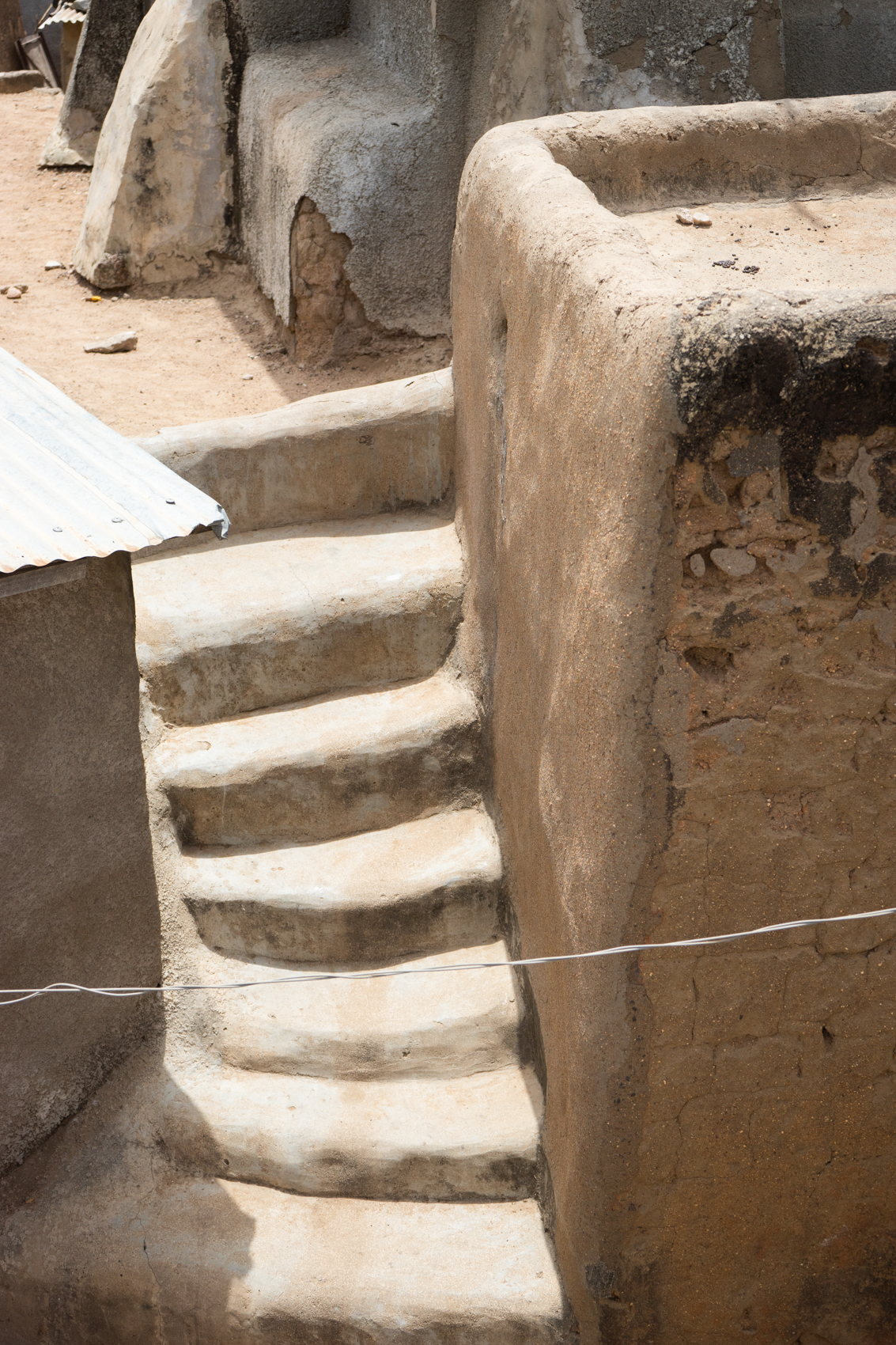
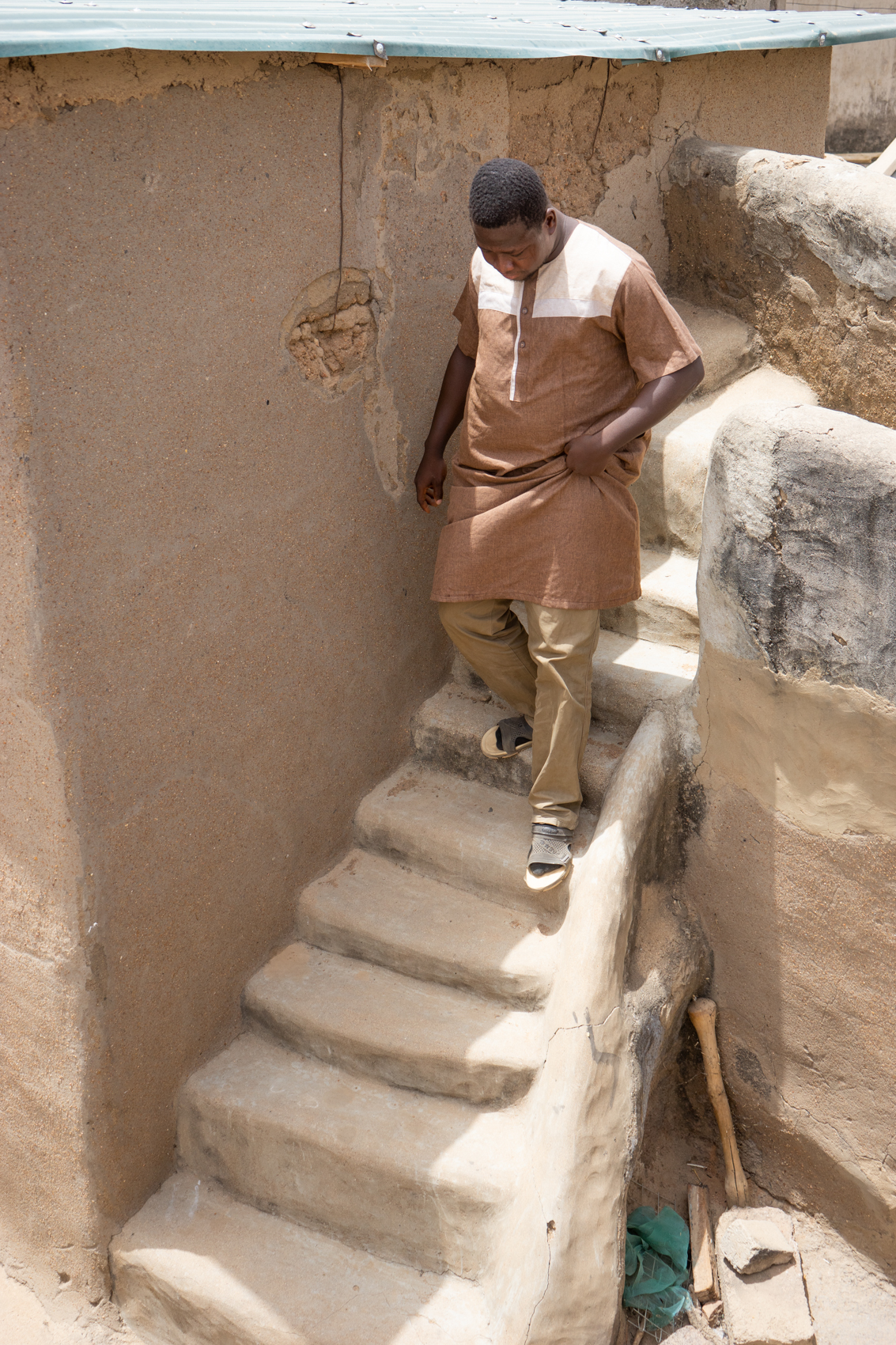
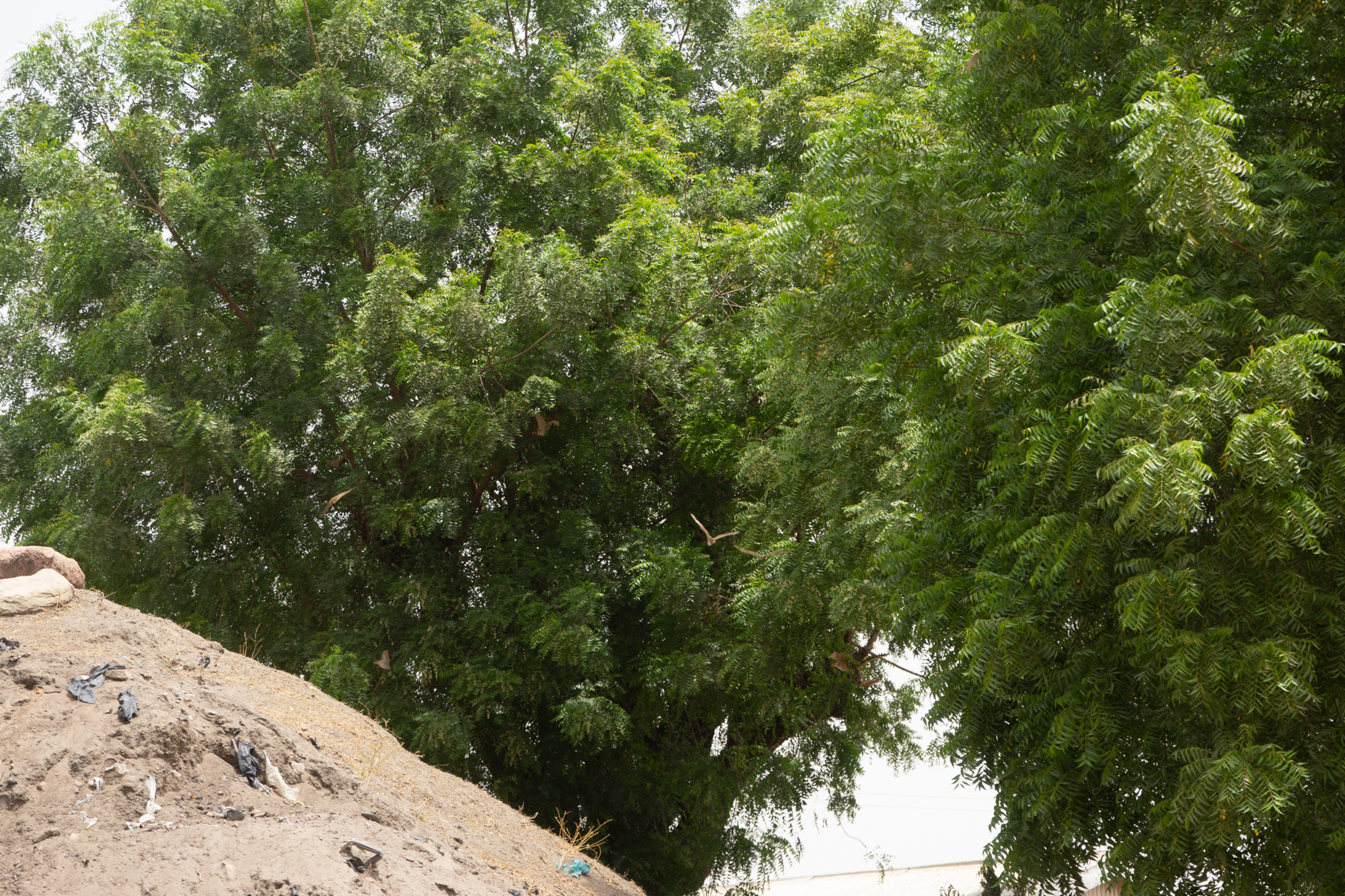
The living quarter was separated into two rooms, the first was for the men, was the second was set further back, to better protect the women and children. Today, the people have moved into more modern quarters, and the only things living in this place were dozens of bats. We headed back out into the daylight and followed our guide up a flight of stairs, onto the roof. The houses are all constructed with flat roofs, and then used to both dry grain and to sleep outdoors, during the hot summer nights.